
Korean J Clin Microbiol.
2012 Mar;15(1):1-8. 10.5145/KJCM.2012.15.1.1.
Carbapenem-Resistant Acinetobacter baumannii
- Affiliations
-
- 1Department of Laboratory Medicine and Research Institute of Bacterial Resistance, Yonsei University College of Medicine, Seoul, Korea. kscpjsh@yuhs.ac
- KMID: 2224853
- DOI: http://doi.org/10.5145/KJCM.2012.15.1.1
Abstract
- Clinical isolates of Acinetobacter spp. in Korea exhibit higher antimicrobial resistance rates than in foreign countries and frequently show multi-drug resistance. Approximately 67% (272/405) of Acinetobacter baumannii isolates collected from 19 hospitals in Korea in 2008 exhibited intermediate susceptibility or resistance to imipenem and/or meropenem. The most important mechanisms in acquiring carbapenem resistance in A. baumannii in Korea are production of OXA-23 and overproduction of OXA-51, while that in non-baumannii Acinetobacter is the production of metallo-beta-lactamases. All the carbapenem-resistant A. baumannii isolates were identified as clonal complex 92 and belonged to worldwide clone 2.
MeSH Terms
Figure
-
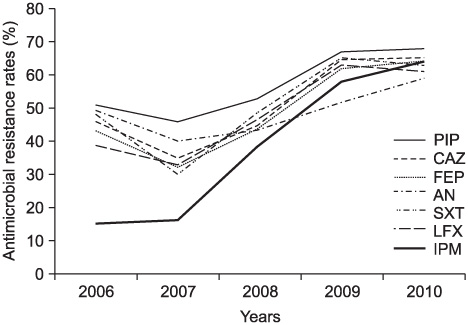
Fig. 1 Trend of antimicrobial resistance of Acinetobacter baumannii clinical isolates. Abbreviations: PIP, piperacillin; CAZ, ceftazidime; FEP, cefepime; AN, amikacin; SXT, trimethoprim-sulfamethoxazole; LFX, levofloxacin; IPM, imipenem.
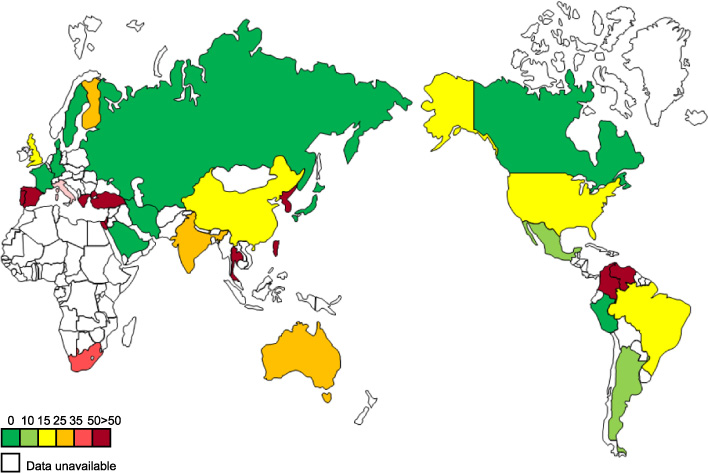
Fig. 2 Acinetobacter spp. clinical isolate resistant to carbapenems in the world.
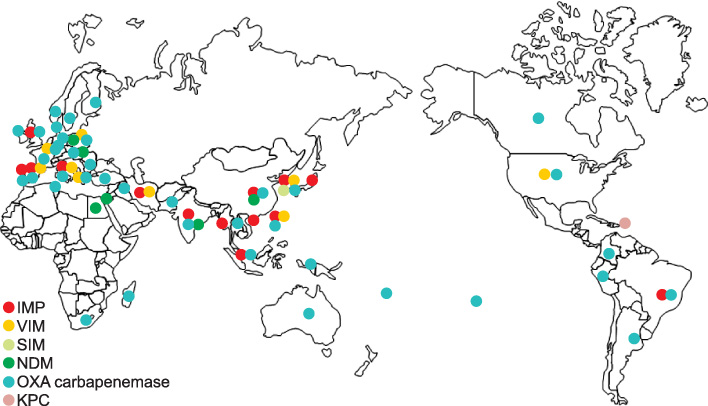
Fig. 3 Worldwide dissemination of carbapenemase in Acinetobacter spp.
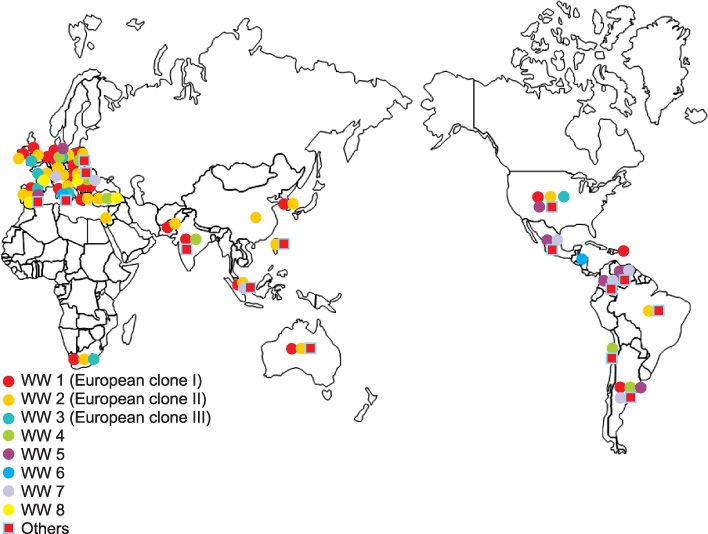
Fig. 4 Distribution of variety clones in carbapenemase producing Acinetobacter baumannii.
Reference
-
1. Bergogne-Bérézin E, Towner KJ. Acinetobacter spp. as nosocomial pathogens: microbiological, clinical, and epidemiological features. Clin Microbiol Rev. 1996. 9:148–165.2. Villegas MV, Hartstein AI. Acinetobacter outbreaks,1977-2000. Infect Control Hosp Epidemiol. 2003. 24:284–295.3. Bouvet PJ, Grimont PA. Identification and biotyping of clinical isolates of Acinetobacter. Ann Inst Pasteur Microbiol. 1987. 138:569–578.4. Tjernberg I, Ursing J. Clinical strains of Acinetobacter classified by DNA-DNA hybridization. APMIS. 1989. 97:595–605.5. Peleg AY, Seifert H, Paterson DL. Acinetobacter baumannii: emergence of a successful pathogen. Clin Microbiol Rev. 2008. 21:538–582.6. Dijkshoorn L, Nemec A, Seifert H. An increasing threat in hospitals: multidrug-resistant Acinetobacter baumannii. Nat Rev Microbiol. 2007. 5:939–951.7. Lee K, Kim MN, Kim JS, Hong HL, Kang JO, Shin JH, et al. KONSAR Group. Further increases in carbapenem-, amikacin-, and fluoroquinolone-resistant isolates of Acinetobacter spp. and P. aeruginosa in Korea: KONSAR study 2009. Yonsei Med J. 2011. 52:793–802.8. Mera RM, Miller LA, Amrine-Madsen H, Sahm DF. Acinetobacter baumannii 2002-2008: increase of carbapenem-associated multiclass resistance in the United States. Microb Drug Resist. 2010. 16:209–215.9. Lee Y, Lee J, Jeong SH, Lee J, Bae IK, Lee K. Carbapenem-non-susceptible Acinetobacter baumannii of sequence type 92 or its single-locus variants with a G428T substitution in zone 2 of the rpoB gene. J Antimicrob Chemother. 2011. 66:66–72.10. Robledo IE, Aquino EE, Santé MI, Santana JL, Otero DM, León CF, et al. Detection of KPC in Acinetobacter spp. in Puerto Rico. Antimicrob Agents Chemother. 2010. 54:1354–1357.11. Higgins PG, Poirel L, Lehmann M, Nordmann P, Seifert H. OXA-143, a novel carbapenem-hydrolyzing class D beta-lactamase in Acinetobacter baumannii. Antimicrob Agents Chemother. 2009. 53:5035–5038.12. Donald HM, Scaife W, Amyes SG, Young HK. Sequence analysis of ARI-1, a novel OXA β-lactamase, responsible for imipenem resistance in Acinetobacter baumannii 6B92. Antimicrob Agents Chemother. 2000. 44:196–199.13. Zhou H, Pi BR, Yang Q, Yu YS, Chen YG, Li LJ, et al. Dissemination of imipenem-resistant Acinetobacter baumannii strains carrying the ISAba1 blaOXA-23 genes in a Chinese hospital. J Med Microbiol. 2007. 56:1076–1080.14. Afzal-Shah M, Woodford N, Livermore DM. Characterization of OXA-25, OXA-26, and OXA-27, molecular class D β-lactamases associated with carbapenem resistance in clinical isolates of Acinetobacter baumannii. Antimicrob Agents Chemother. 2001. 45:583–588.15. Bou G, Oliver A, Martínez-Beltrán J. OXA-24, a novel class D β-lactamase with carbapenemase activity in an Acinetobacter baumannii clinical strain. Antimicrob Agents Chemother. 2000. 44:1556–1561.16. Turton JF, Ward ME, Woodford N, Kaufmann ME, Pike R, Livermore DM, et al. The role of ISAba1 in expression of OXA carbapenemase genes in Acinetobacter baumannii. FEMS Microbiol Lett. 2006. 258:72–77.17. Walsh TR. Clinically significant carbapenemases: an update. Curr Opin Infect Dis. 2008. 21:367–371.18. Pournaras S, Markogiannakis A, Ikonomidis A, Kondyli L, Bethimouti K, Maniatis AN, et al. Outbreak of multiple clones of imipenem-resistant Acinetobacter baumannii isolates expressing OXA-58 carbapenemase in an intensive care unit. J Antimicrob Chemother. 2006. 57:557–561.19. Peleg AY, Franklin C, Walters LJ, Bell JM, Spelman DW. OXA-58 and IMP-4 carbapenem-hydrolyzing beta-lactamases in an Acinetobacter junii blood culture isolate from Australia. Antimicrob Agents Chemother. 2006. 50:399–400.20. Poirel L, Nordmann P. Carbapenem resistance in Acinetobacter baumannii: mechanisms and epidemiology. Clin Microbiol Infect. 2006. 12:826–836.21. Lee K, Lee WG, Uh Y, Ha GY, Cho J, Chong Y. Korean Nationwide Surveillance of Antimicrobial Resistance Group. VIM- and IMP-type metallo-β-lactamase-producing Pseudomonas spp. and Acinetobacter spp. in Korean hospitals. Emerg Infect Dis. 2003. 9:868–871.22. Lee K, Yum JH, Yong D, Lee HM, Kim HD, Docquier JD, et al. Novel acquired metallo-β-lactamase gene, blaSIM-1, in a class 1 integron from Acinetobacter baumannii clinical isolates from Korea. Antimicrob Agents Chemother. 2005. 49:4485–4491.23. Cornaglia G, Giamarellou H, Rossolini GM. Metallo-β-lactamases: a last frontier for β-lactams? Lancet Infect Dis. 2011. 11:381–393.24. Limansky AS, Mussi MA, Viale AM. Loss of a 29-kilodalton outer membrane protein in Acinetobacter baumannii is associated with imipenem resistance. J Clin Microbiol. 2002. 40:4776–4778.25. Mussi MA, Limansky AS, Viale AM. Acquisition of resistance to carbapenems in multidrug-resistant clinical strains of Acinetobacter baumannii: natural insertional inactivation of a gene encoding a member of a novel family of β-barrel outer membrane proteins. Antimicrob Agents Chemother. 2005. 49:1432–1440.26. Bou G, Cerveró G, Domnguez MA, Quereda C, Martínez-Beltrán J. Characterization of a nosocomial outbreak caused by a multiresistant Acinetobacter baumannii strain with a carbapenem-hydrolyzing enzyme: high-level carbapenem resistance in A. baumannii is not due solely to the presence of β-lactamases. J Clin Microbiol. 2000. 38:3299–3305.27. del Mar Tomás M, Beceiro A, Pérez A, Velasco D, Moure R, Villanueva R, et al. Cloning and functional analysis of the gene encoding the 33- to 36-kilodalton outer membrane protein associated with carbapenem resistance in Acinetobacter baumannii. Antimicrob Agents Chemother. 2005. 49:5172–5175.28. Dupont M, Pagès JM, Lafitte D, Siroy A, Bollet C. Identification of an OprD homologue in Acinetobacter baumannii. J Proteome Res. 2005. 4:2386–2390.29. Wieczorek P, Sacha P, Hauschild T, Zórawski M, Krawczyk M, Tryniszewska E. Multidrug resistant Acinetobacter baumannii--the role of AdeABC (RND family) efflux pump in resistance to antibiotics. Folia Histochem Cytobiol. 2008. 46:257–267.30. Héritier C, Poirel L, Lambert T, Nordmann P. Contribution of acquired carbapenem-hydrolyzing oxacillinases to carbapenem resistance in Acinetobacter baumannii. Antimicrob Agents Chemother. 2005. 49:3198–3202.31. Marchand I, Damier-Piolle L, Courvalin P, Lambert T. Expression of the RND-type efflux pump AdeABC in Acinetobacter baumannii is regulated by the AdeRS two-component system. Antimicrob Agents Chemother. 2004. 48:3298–3304.32. Kim CK, Lee Y, Lee H, Woo GJ, Song W, Kim MN, et al. Prevalence and diversity of carbapenemases among imipenem-nonsusceptible Acinetobacter isolates in Korea: emergence of a novel OXA-182. Diagn Microbiol Infect Dis. 2010. 68:432–438.33. Higgins PG, Dammhayn C, Hackel M, Seifert H. Global spread of carbapenem-resistant Acinetobacter baumannii. J Antimicrob Chemother. 2010. 65:233–238.34. Mugnier PD, Poirel L, Naas T, Nordmann P. Worldwide dissemination of the blaOXA-23 carbapenemase gene of Acinetobacter baumannii. Emerg Infect Dis. 2010. 16:35–40.35. Bartual SG, Seifert H, Hippler C, Luzon MA, Wisplinghoff H, Rodríguez-Valera F. Development of a multilocus sequence typing scheme for characterization of clinical isolates of Acinetobacter baumannii. J Clin Microbiol. 2005. 43:4382–4390.36. Diancourt L, Passet V, Nemec A, Dijkshoorn L, Brisse S. The population structure of Acinetobacter baumannii: expanding multiresistant clones from an ancestral susceptible genetic pool. PLoS One. 2010. 5:e10034.
- Full Text Links
-
- Actions
-
Cited
- CITED
-
- Close
- Share
-
- Similar articles
-
- Update on the Epidemiology, Treatment, and Outcomes of Carbapenem-resistant Acinetobacter infections
- ISAba15 Inserted into Outer Membrane Protein Gene carO in Acinetobacter baumannii
- Antimicrobial Therapy for Infections Caused by Carbapenem-Resistant Gram-Negative Bacteria
- Clinical Characteristics of Intensive Care Unit Patients with Carbapenem Resistant Acinetobacter Baumannii Isolated from Sputum
- Molecular and Epidemiological Characterization of Carbapenem-Resistant Acinetobacter baumannii in Non-Tertiary Korean Hospitals


