
Successful Graft Recovery from Thrombotic Acute Kidney Injury in a Kidney Transplant Patient with Antiphospholipid Syndrome
- Affiliations
-
- 1Department of Internal Medicine, Yonsei University College of Medicine, Seoul, Korea. docbsk@yuhs.ac
- 2Department of Pathology, Yonsei University College of Medicine, Seoul, Korea.
- KMID: 1495870
- DOI: http://doi.org/10.4285/jkstn.2013.27.3.128
Abstract
- Antiphospholipid syndrome nephropathy (APSN) is well documented in the literature as the renal involvement of the antiphospholipid syndrome (APS). A review of literature also shows that among antiphospholipid antibodies, lupus anticoagulant (LA) positivity is recognized as the strongest risk factor for APSN. In addition, APSN is also known to be associated with a poor functional outcome in the first posttransplant year. Therefore, it is a general belief that renal transplantation may be life threatening in APS patients. Furthermore, the presence of LA at the time of transplantation is particularly associated with a high rate of allograft APSN and the consequent poor transplantation outcomes. Here, we report the case that thrombotic acute kidney injury due to APSN after kidney transplantation can be successfully treated if anticoagulation therapy is timely applied with a prompt diagnosis.
Keyword
MeSH Terms
Figure
-
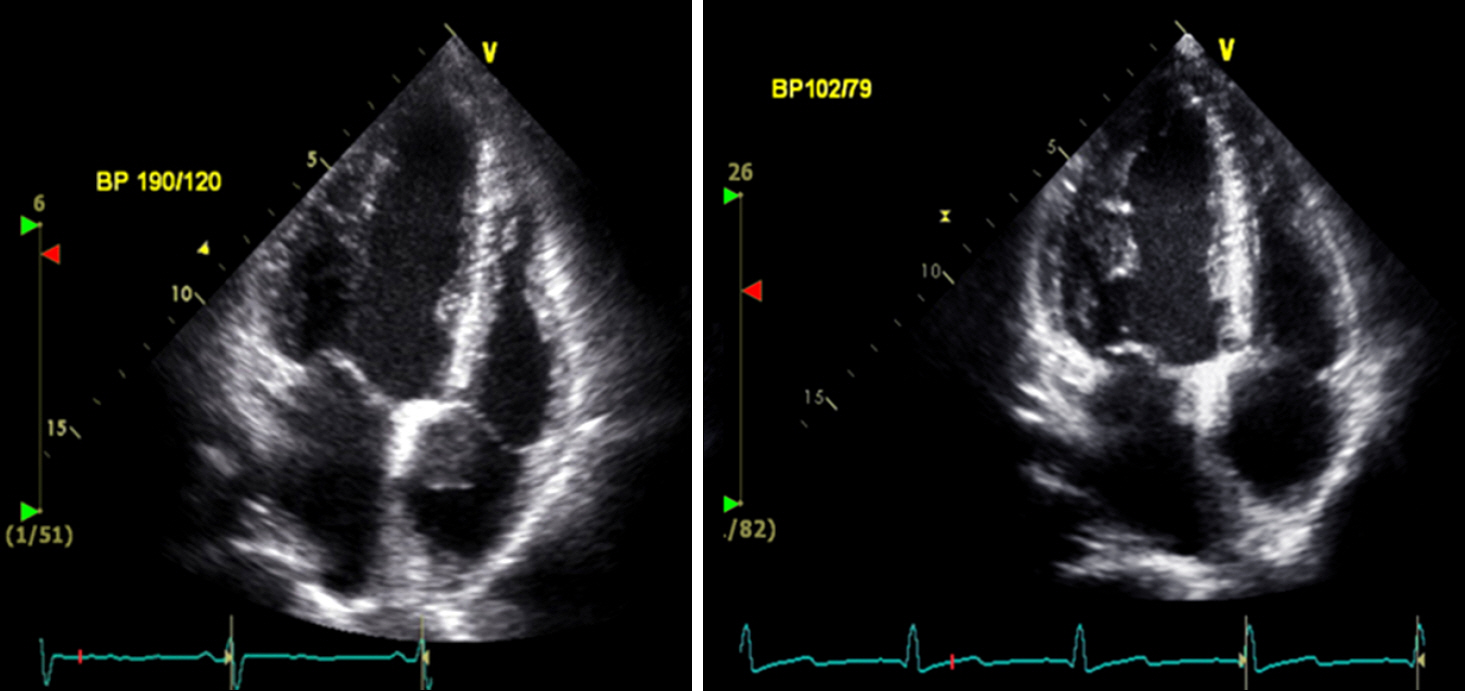
Fig. 1. Echocardiogram showing right atrium thrombus. After re-moval via submammrial incision, thrombus was disappeared.
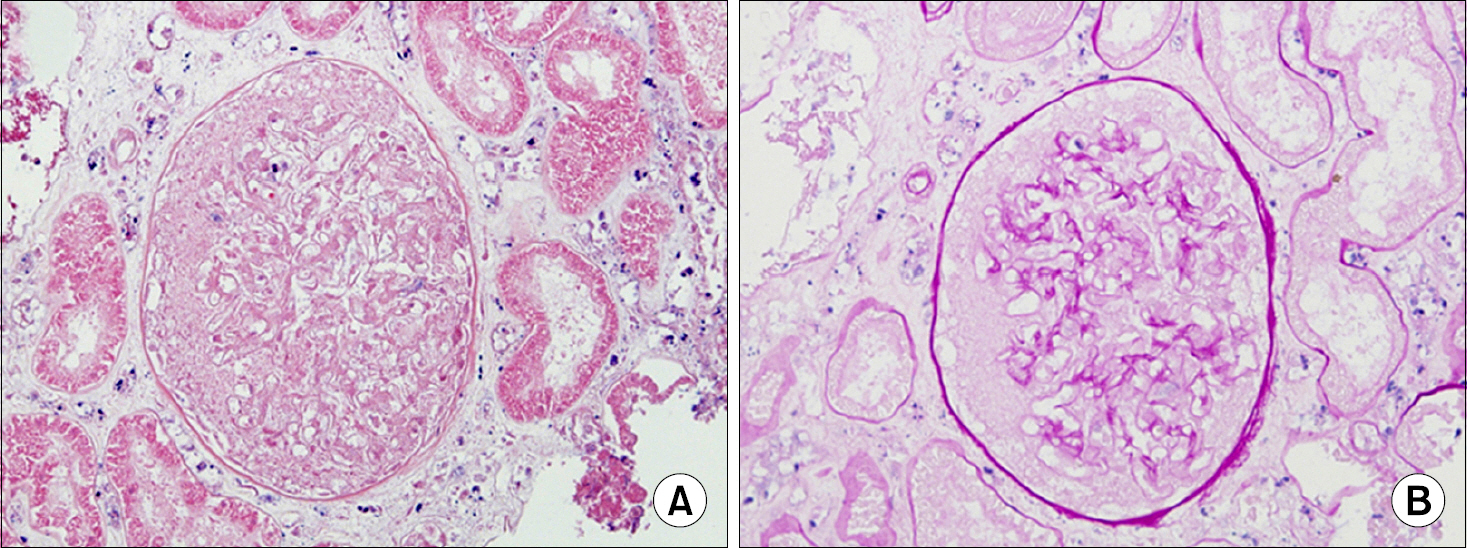
Fig. 2. The biopsy slide of transplanted kidney showing cortical necrosis, focal (postoperative day 8) (A, HE stain, ×120; B, PAS stain,×120).
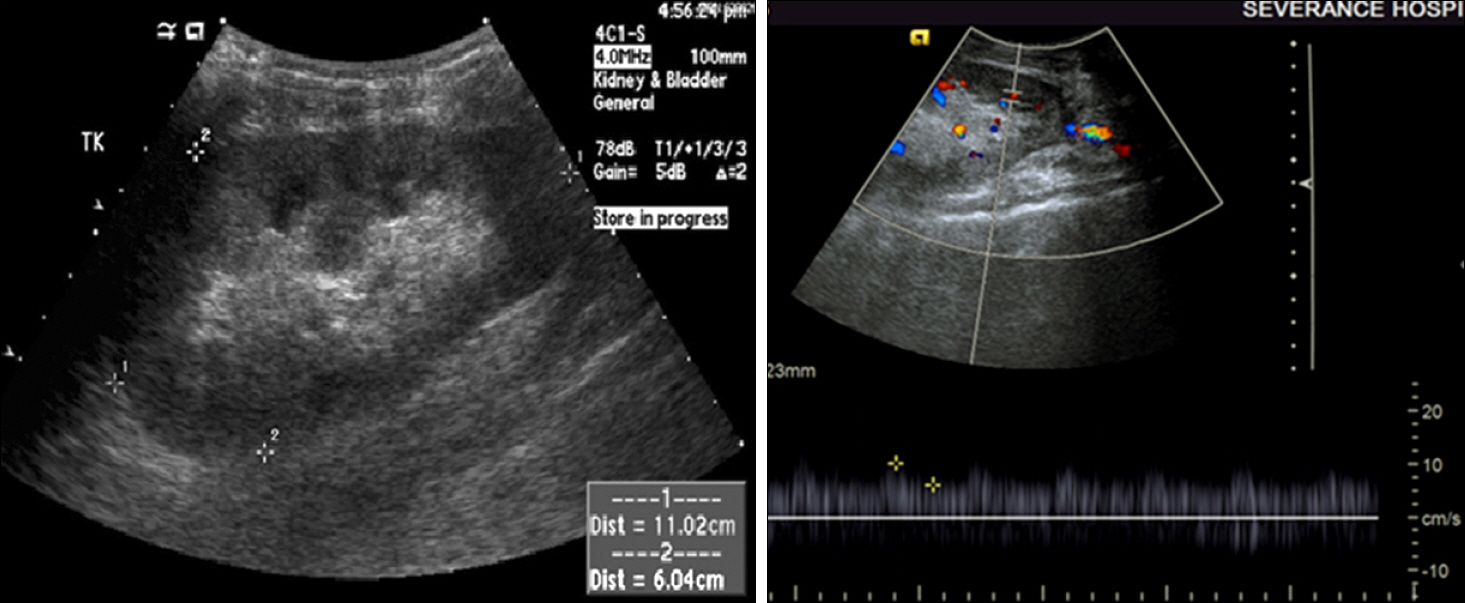
Fig. 3. Sonography of transplanted kidney (postoperative day 15). The transplanted kidney size was 11.4 cm. The echogenicity of the cortex was increased and blood flow was decreased. The resistive index of upper, mid, and lower pole was 0.56.
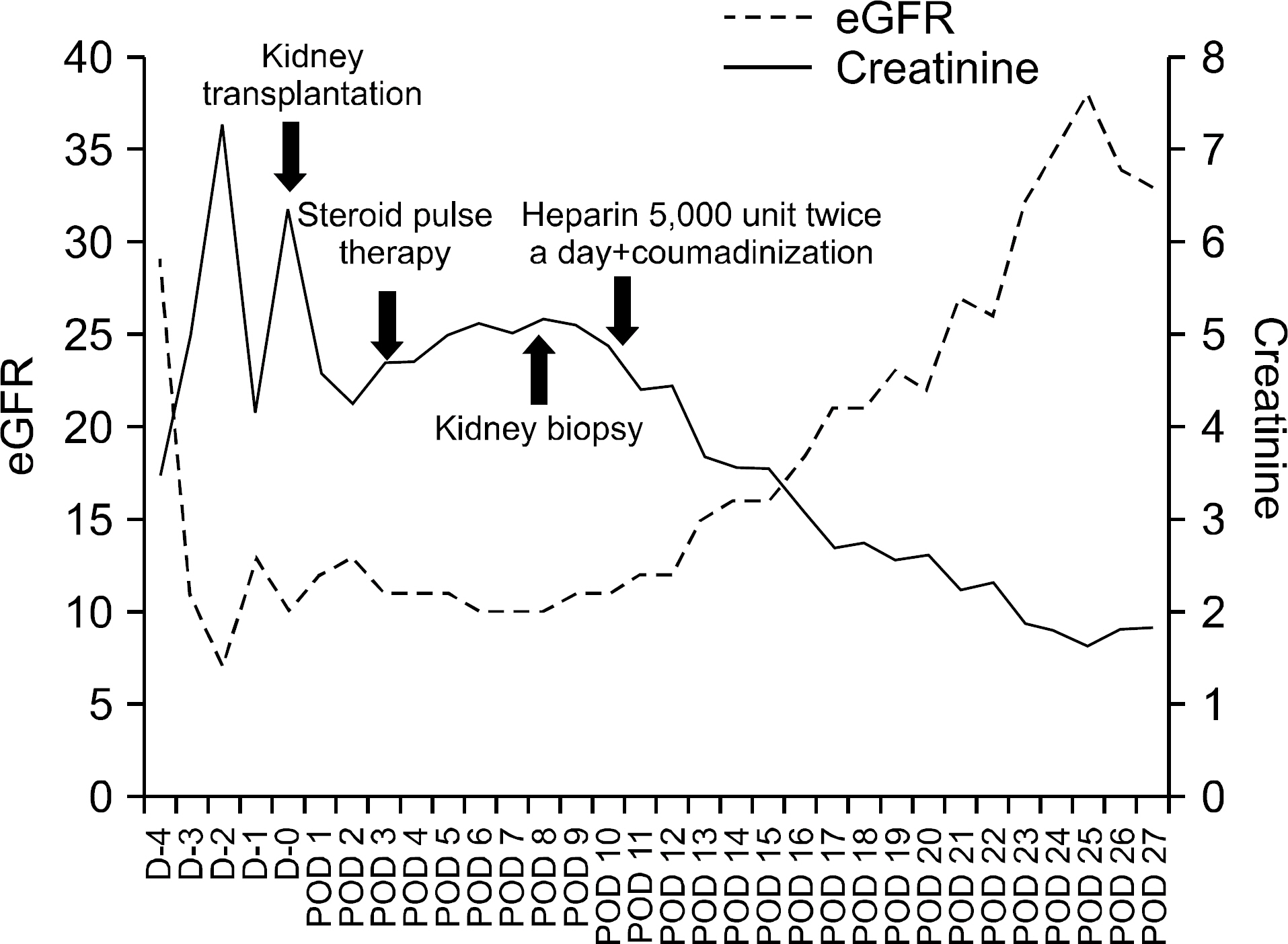
Fig. 4. Change of renal function. After anticoagulation therapy was started the transplanted kidney function was improved. Abbreviations: eGFR, epidermal growth factor receptor; POD, postoperative day.
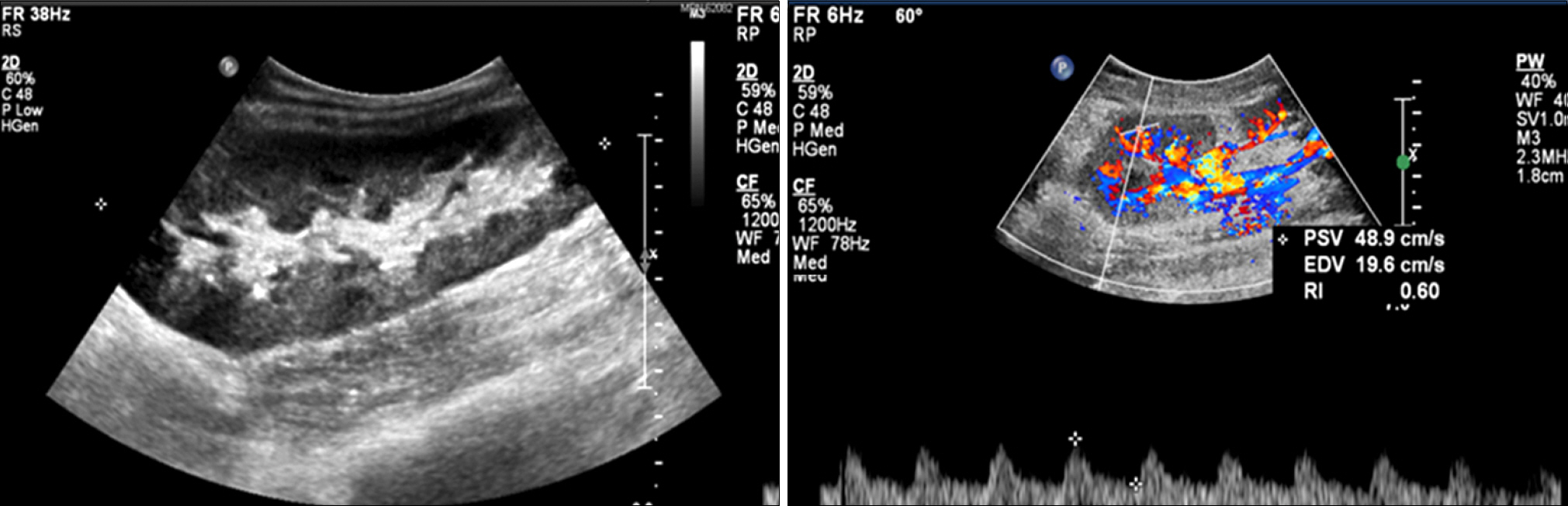
Fig. 5. Sonography of transplanted kidney (postoperative day 3 months). The transplanted kidney size was 11.8 cm. The echogenicity of the cortex was normal and there was no hydronephrosis was no hydronephrosis or fluid collection. The resistive index of upper, mid, and lower pole was 0.60∼0.64.
Reference
-
1). Sangle NA, Smock KJ. Antiphospholipid antibody syndrome. Arch Pathol Lab Med. 2011; 135:1092–6.
Article2). Uthman I, Khamashta M. Antiphospholipid syndrome and the kidneys. Semin Arthritis Rheum. 2006; 35:360–7.
Article3). Hadaya K, Ferrari-Lacraz S, Fumeaux D, Boehlen F, Toso C, Moll S, et al. Eculizumab in acute recurrence of thrombotic microangiopathy after renal transplantation. Am J Transplant. 2011; 11:2523–7.
Article4). Canaud G, Bienaimé F, Noël LH, Royal V, Alyanakian MA, Dautzenberg MD, et al. Severe vascular lesions and poor functional outcome in kidney transplant recipients with lupus anticoagulant antibodies. Am J Transplant. 2010; 10:2051–60.
Article5). Tektonidou MG, Sotsiou F, Nakopoulou L, Vlachoyia-nnopoulos PG, Moutsopoulos HM. Antiphospholipid syndrome nephropathy in patients with systemic lupus eryth-ematosus and antiphospholipid antibodies: prevalence, clinical associations, and long-term outcome. Arthritis Rheum. 2004; 50:2569–79.
Article6). Dolff S, Berden JH, Bijl M. Treatment of lupus nephritis. Expert Rev Clin Immunol. 2010; 6:901–11.
Article7). Ripert T, Menard J, Schoepen Y, N'Guyen P, Rieu P, Brandt B, et al. Anticoagulation after renal transplantation: a multicenter survey on clinical practice. Prog Urol. 2009; 19:186–91.8). Rubenwolf P, Lopau K, Gerharz EW, Heidbreder E, Riedmiller H. Antiphospholipid antibody syndrome: a pri-ori a contraindication to kidney transplantation? Aktuelle Urol. 2007; 38:132–6.
- Full Text Links
-
- Actions
-
Cited
- CITED
-
- Close
- Share
-
- Similar articles
-
- Antiphospholipid Syndrome Presenting as Recurrent Pancreatitis and Renal Thrombotic Microangiopathy
- Acute Kidney Injury Associated with Disseminated Intravascular Coagulation that Developed after a Hysterectomy in a Patient with Probable Catastrophic Antiphospholipid Syndrome
- Thrombotic microangiopathy, rare cause of deceased donor acute kidney injury: is a donor biopsy necessary before donation?
- Characteristics and management of thrombotic microangiopathy in kidney transplantation
- Pathology of Thrombotic Microangiopathy


