
Asia Pac Allergy.
2016 Jul;6(3):149-156. 10.5415/apallergy.2016.6.3.149.
Supporting the validation of the new allergic and hypersensitivity conditions section of the World Health Organization International Classification of Diseases-11
- Affiliations
-
- 1Hospital SÃrio Libanês, São Paulo 01308-050, Brazil. luciana.tanno@gmail.com
- 2Division of Allergy, Department of Pulmonology, University Hospital of Montpellier, Montpellier, and Pierre Louis Institute of Epidemiology and Public Health, Sorbonne Universités, Paris, France.
- 3Section of Allergy and Clinical Immunology, Imperial College London, National Heart and Lung Institute, Royal Brompton Hospital, London, United Kingdom.
- KMID: 2400415
- DOI: http://doi.org/10.5415/apallergy.2016.6.3.149
Abstract
- BACKGROUND
The new International Classification of Diseases (ICD)-11 "Allergic and hypersensitivity conditions" section has been constructed as a result of a detailed and careful action plan based on scientific evidences for the necessity of changes and collaboration with the World Health Organization (WHO) ICD-11 revision governance. All the efforts are being acknowledged by the Joint Allergy Academies.
OBJECTIVE
Considering the new classification model addressed to the allergic and hypersensitivity conditions and following the ICD WHO agenda, we believe it is the appropriate time to start supporting the validation process in collaboration with the WHO ICD governance.
METHODS
We conducted a mapping of ICD-10 allergic and hypersensitivity conditions in the ICD-11 beta phase structure and categorized the conditions as fitting by "precoordination," "postcoordination," "indexed to the ICD-11 Foundation," "no code fit properly" or "no correspondence" in the ICD-11.
RESULTS
From overall 125 ICD-10 entities spread in 6 chapters, 57.6% were able to be precoordinated, 4% postcoordinated, 12% indexed to the Foundation, 9.6% had no code fitting properly and 18.6% had no correspondence in the ICD-11 framework.
CONCLUSION
We have been able to demonstrate that 83.2% of the ICD-10 allergic and hypersensitivity conditions could be captured by the current ICD-11 beta draft framework. We strongly believe that our findings constitute a key step forward for a softer transition of the ICD-10 allergic and hypersensitivity conditions to the ICD-11, supporting the WHO in this process as well as strengthening the visibility of the Allergy specialty and ensuring quality management of allergic patients.
Keyword
MeSH Terms
Figure
-
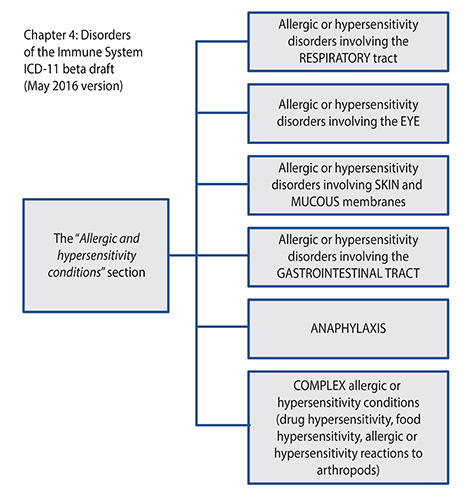
Fig. 1 The headings of the new "Allergic and hypersensitivity conditions" section of the "Disorders of the Immune System (ICD-11 beta draft, May 2016 version)". ICD, International Classification of Diseases.
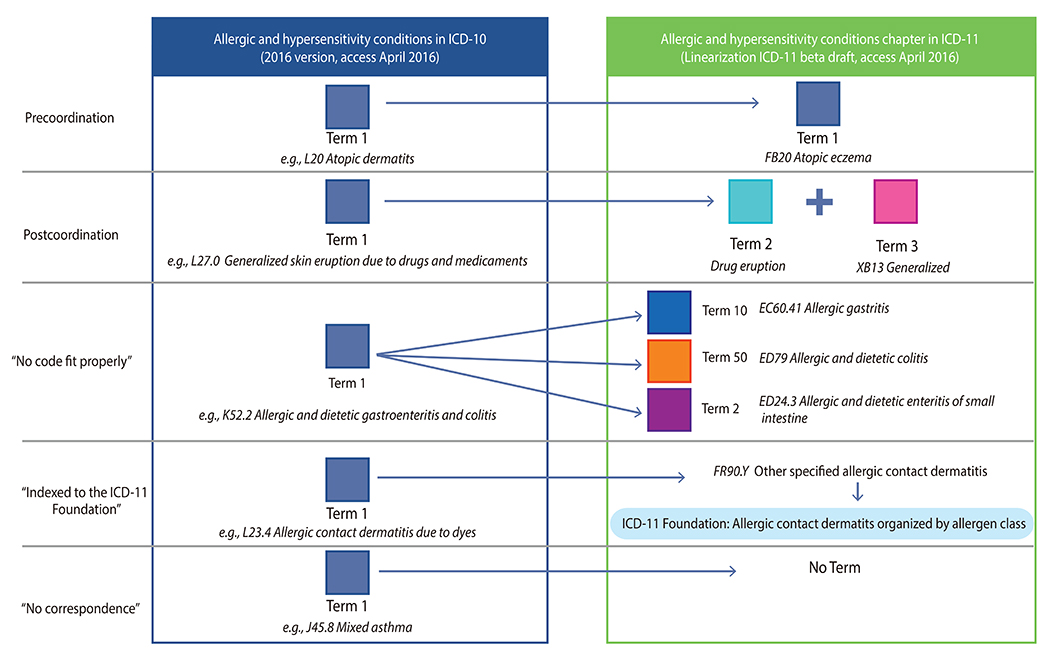
Fig. 2 General logic of classification strategy. ICD, International Classification of Diseases.
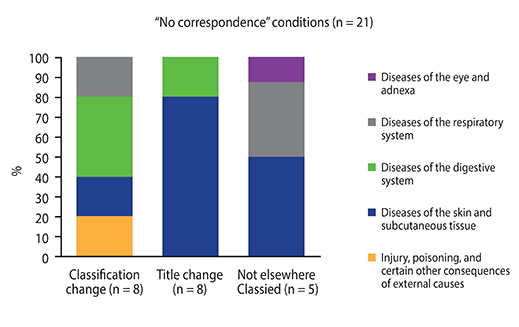
Fig. 3 Reasons for no correspondence of ICD-10 allergic and hypersensitivity conditions in ICD-11. ICD, International Classification of Diseases.
Cited by 1 articles
-
Advances in technology are changing the future of medicine
Yoon-Seok Chang
Asia Pac Allergy. 2016;6(3):137-138. doi: 10.5415/apallergy.2016.6.3.137.
Reference
-
1. World Health Organization. International Classification of Diseases [Internet]. Geneva: World Health Organization;c2016. cited 2016 Jun 1. Available from: http://www.who.int/classifications/icd/en.2. Tanno LK, Calderon MA, Goldberg BJ, Akdis CA, Papadopoulos NG, Demoly P. Categorization of allergic disorders in the new World Health Organization International Classification of Diseases. Clin Transl Allergy. 2014; 4:42.
Article3. Tanno LK, Ganem F, Demoly P, Toscano CM, Bierrenbach AL. Undernotification of anaphylaxis deaths in Brazil due to difficult coding under the ICD-10. Allergy. 2012; 67:783–789.
Article4. Demoly P, Tanno LK, Akdis CA, Lau S, Calderon MA, Santos AF, Sanchez-Borges M, Rosenwasser LJ, Pawankar R, Papadopoulos NG. Global classification and coding of hypersensitivity diseases - An EAACI - WAO survey, strategic paper and review. Allergy. 2014; 69:559–570.
Article5. Tanno LK, Calderon MA, Goldberg BJ, Gayraud J, Bircher AJ, Casale T, Li J, Sanchez-Borges M, Rosenwasser LJ, Pawankar R, Papadopoulos NG, Demoly P. Constructing a classification of hypersensitivity/allergic diseases for ICD-11 by crowdsourcing the allergist community. Allergy. 2015; 70:609–615.
Article6. Tanno LK, Calderon M, Papadopoulos NG, Demoly P. EAACI/WAO Task force of a Global Classification of Hypersensitivity/Allergic diseases. Mapping hypersensitivity/allergic diseases in the International Classification of Diseases (ICD)-11: cross-linking terms and unmet needs. Clin Transl Allergy. 2015; 5:20.
Article7. Tanno LK, Calderon MA, Demoly P. Allergy Academies. Optimization and simplification of the Allergic and Hypersensitivity conditions classification for the ICD-11. Allergy. 2016; 71:671–676.
Article8. Tanno LK, Calderon MA, Demoly P. Joint Allergy Academies. New allergic and hypersensitivity conditions section in the International Classification of Diseases-11. Allergy Asthma Immunol Res. 2016; 8:383–388.
Article9. Tanno LK, Calderon MA, Demoly P. Making allergic and hypersensitivity conditions visible in the International Classification of Diseases-11. Asia Pac Allergy. 2015; 5:193–196.
Article10. Tanno LK, Calderon MA, Li J, Casale T, Demoly P. Joint Allergy Academies. Updating allergy and/or hypersensitivity diagnostic procedures in the WHO ICD-11 revision. J Allergy Clin Immunol Pract. 2016; 4:650–657.
Article11. Tanno LK, Calderon MA, Papadopoulos NG, Sanchez-Borges M, Rosenwasser LJ, Bousquet J, Pawankar R, Sisul JC, Cepeda AM, Li J, Muraro A, Fineman S, Sublett JL, Katelaris CH, Chang YS, Moon HB, Casale T, Demoly P. Joint Allergy Academies. Revisiting desensitization and allergen immunotherapy concepts for the International Classification of Diseases (ICD)-11. J Allergy Clin Immunol Pract. 2016; 4:643–649.
Article12. World Health Organization. ICD-11 beta draft [Internet]. Geneva: World Health Organization;c2016. cited 2016 Jun 1. Available from:http://apps.who.int/classifications/icd11/browse/l-m/en.13. World Health Organization. ICD-10 version 2016 [Internet]. Geneva: World Health Organization;c2016. cited 2016 Jun 1. Available from: http://apps.who.int/classifications/icd10/browse/2016/en.14. Johansson SG, Bieber T, Dahl R, Friedmann PS, Lanier BQ, Lockey RF, Motala C, Ortega Martell JA, Platts-Mills TA, Ring J, Thien F, Van Cauwenberge P, Williams HC. Revised nomenclature for allergy for global use: Report of the Nomenclature Review Committee of the World Allergy Organization, October 2003. J Allergy Clin Immunol. 2004; 113:832–836.
Article15. Sampson HA, Muñoz-Furlong A, Campbell RL, Adkinson NF Jr, Bock SA, Branum A, Brown SG, Camargo CA Jr, Cydulka R, Galli SJ, Gidudu J, Gruchalla RS, Harlor AD Jr, Hepner DL, Lewis LM, Lieberman PL, Metcalfe DD, O'Connor R, Muraro A, Rudman A, Schmitt C, Scherrer D, Simons FE, Thomas S, Wood JP, Decker WW. Second symposium on the definition and management of anaphylaxis: summary report--Second National Institute of Allergy and Infectious Disease/Food Allergy and Anaphylaxis Network symposium. J Allergy Clin Immunol. 2006; 117:391–397.
Article16. Scadding G, Hellings P, Alobid I, Bachert C, Fokkens W, van Wijk RG, Gevaert P, Guilemany J, Kalogjera L, Lund V, Mullol J, Passalacqua G, Toskala E, van Drunen C. Diagnostic tools in Rhinology EAACI position paper. Clin Transl Allergy. 2011; 1:2.
Article17. Fokkens W, Lund V, Mullol J. European Position Paper on Rhinosinusitis and Nasal Polyps group. European position paper on rhinosinusitis and nasal polyps 2007. Rhinol Suppl. 2007; (20):1–136.18. Bousquet J, Schunemann HJ, Zuberbier T, Bachert C, Baena-Cagnani CE, Bousquet PJ, Brozek J, Canonica GW, Casale TB, Demoly P, Gerth van Wijk R, Ohta K, Bateman ED, Calderon M, Cruz AA, Dolen WK, Haughney J, Lockey RF, Lötvall J, O'Byrne P, Spranger O, Togias A, Bonini S, Boulet LP, Camargos P, Carlsen KH, Chavannes NH, Delgado L, Durham SR, Fokkens WJ, Fonseca J, Haahtela T, Kalayci O, Kowalski ML, Larenas-Linnemann D, Li J, Mohammad Y, Mullol J, Naclerio R, O'Hehir RE, Papadopoulos N, Passalacqua G, Rabe KF, Pawankar R, Ryan D, Samolinski B, Simons FE, Valovirta E, Yorgancioglu A, Yusuf OM, Agache I, Aït-Khaled N, Annesi-Maesano I, Beghe B, Ben Kheder A, Blaiss MS, Boakye DA, Bouchard J, Burney PG, Busse WW, Chan-Yeung M, Chen Y, Chuchalin AG, Costa DJ, Custovic A, Dahl R, Denburg J, Douagui H, Emuzyte R, Grouse L, Humbert M, Jackson C, Johnston SL, Kaliner MA, Keith PK, Kim YY, Klossek JM, Kuna P, Le LT, Lemiere C, Lipworth B, Mahboub B, Malo JL, Marshall GD, Mavale-Manuel S, Meltzer EO, Morais-Almeida M, Motala C, Naspitz C, Nekam K, Niggemann B, Nizankowska-Mogilnicka E, Okamoto Y, Orru MP, Ouedraogo S, Palkonen S, Popov TA, Price D, Rosado-Pinto J, Scadding GK, Sooronbaev TM, Stoloff SW, Toskala E, van Cauwenberge P, Vandenplas O, van Weel C, Viegi G, Virchow JC, Wang DY, Wickman M, Williams D, Yawn BP, Zar HJ, Zernotti M, Zhong N. WHO Collaborating Center of Asthma and Rhinitis (Montpellier). Development and implementation of guidelines in allergic rhinitis – an ARIA-GA2LEN paper. Allergy. 2010; 65:1212–1221.
Article19. Bacharier LB, Boner A, Carlsen KH, Eigenmann PA, Frischer T, Gotz M, Helms PJ, Hunt J, Liu A, Papadopoulos N, Platts-Mills T, Pohunek P, Simons FE, Valovirta E, Wahn U, Wildhaber J. European Pediatric Asthma Group. Diagnosis and treatment of asthma in childhood: a PRACTALL consensus report. Allergy. 2008; 63:5–34.
Article20. World Health Organization. Chronic respiratory disease: asthma [Internet]. Geneva: World Health Organization;c2016. cited 2016 Jun 1. Available from: http://www.who.int/respiratory/asthma/en/.21. Masoli M, Fabian D, Holt S, Beasley R. Global Initiative for Asthma (GINA) Program. GINA) Program. The global burden of asthma: executive summary of the GINA Dissemination Committee report. Allergy. 2004; 59:469–478.22. Bateman ED, Bousquet J, Keech ML, Busse WW, Clark TJ, Pedersen SE. The correlation between asthma control and health status: the GOAL study. Eur Respir J. 2007; 29:56–62.
Article23. Papadopoulos NG, Arakawa H, Carlsen KH, Custovic A, Gern J, Lemanske R, Le Souef P, Mäkelä M, Roberts G, Wong G, Zar H, Akdis CA, Bacharier LB, Baraldi E, van Bever HP, de Blic J, Boner A, Burks W, Casale TB, Castro-Rodriguez JA, Chen YZ, El-Gamal YM, Everard ML, Frischer T, Geller M, Gereda J, Goh DY, Guilbert TW, Hedlin G, Heymann PW, Hong SJ, Hossny EM, Huang JL, Jackson DJ, de Jongste JC, Kalayci O, Aït-Khaled N, Kling S, Kuna P, Lau S, Ledford DK, Lee SI, Liu AH, Lockey RF, Lødrup-Carlsen K, Lötvall J, Morikawa A, Nieto A, Paramesh H, Pawankar R, Pohunek P, Pongracic J, Price D, Robertson C, Rosario N, Rossenwasser LJ, Sly PD, Stein R, Stick S, Szefler S, Taussig LM, Valovirta E, Vichyanond P, Wallace D, Weinberg E, Wennergren G, Wildhaber J, Zeiger RS. International consensus on (ICON) pediatric asthma. Allergy. 2012; 67:976–997.
Article24. Burks AW, Tang M, Sicherer S, Muraro A, Eigenmann PA, Ebisawa M, Fiocchi A, Chiang W, Beyer K, Wood R, Hourihane J, Jones SM, Lack G, Sampson HA. ICON: food allergy. J Allergy Clin Immunol. 2012; 129:906–920.
Article25. Simons FE, Ardusso LR, Bilo MB, Cardona V, Ebisawa M, El-Gamal YM, Lieberman P, Lockey RF, Muraro A, Roberts G, Sanchez-Borges M, Sheikh A, Shek LP, Wallace DV, Worm M. International consensus on (ICON) anaphylaxis. World Allergy Organ J. 2014; 7:9.
Article26. Moscato G, Pala G, Cullinan P, Folletti I, Gerth van Wijk R, Pignatti P, Quirce S, Sastre J, Toskala E, Vandenplas O, Walusiak-Skorupa J, Malo JL. EAACI Position Paper on assessment of cough in the workplace. Allergy. 2014; 69:292–304.
Article27. Leonardi A, Bogacka E, Fauquert JL, Kowalski ML, Groblewska A, Jedrzejczak-Czechowicz M, Doan S, Marmouz F, Demoly P, Delgado L. Ocular allergy: recognizing and diagnosing hypersensitivity disorders of the ocular surface. Allergy. 2012; 67:1327–1337.
Article28. La Rosa M, Lionetti E, Reibaldi M, Russo A, Longo A, Leonardi S, Tomarchio S, Avitabile T, Reibaldi A. Allergic conjunctivitis: a comprehensive review of the literature. Ital J Pediatr. 2013; 39:18.
Article29. Bonini S, Coassin M, Aronni S, Lambiase A. Vernal keratoconjunctivitis. Eye (Lond). 2004; 18:345–351.
Article30. Akdis CA, Akdis M, Bieber T, Bindslev-Jensen C, Boguniewicz M, Eigenmann P, Hamid Q, Kapp A, Leung DY, Lipozencic J, Luger TA, Muraro A, Novak N, Platts-Mills TA, Rosenwasser L, Scheynius A, Simons FE, Spergel J, Turjanmaa K, Wahn U, Weidinger S, Werfel T, Zuberbier T. European Academy of Allergology. Clinical Immunology/American Academy of Allergy, Asthma and Immunology/PRACTALL Consensus Group. Diagnosis and treatment of atopic dermatitis in children and adults: European Academy of Allergology and Clinical Immunology/American Academy of Allergy, Asthma and Immunology/PRACTALL Consensus Report. Allergy. 2006; 61:969–987.
Article31. Bonitsis NG, Tatsioni A, Bassioukas K, Ioannidis JP. Allergens responsible for allergic contact dermatitis among children: a systematic review and meta-analysis. Contact Dermatitis. 2011; 64:245–257.
Article32. Tan CH, Rasool S, Johnston GA. Contact dermatitis: allergic and irritant. Clin Dermatol. 2014; 32:116–124.
Article33. Zuberbier T, Asero R, Bindslev-Jensen C, Walter Canonica G, Church MK, Gimenez-Arnau A, Grattan CE, Kapp A, Merk HF, Rogala B, Saini S, Sánchez-Borges M, Schmid-Grendelmeier P, Schunemann H, Staubach P, Vena GA, Wedi B, Maurer M. Dermatology Section of the European Academy of Allergology and Clinical Immunology. Global Allergy and Asthma European Network. European Dermatology Forum. World Allergy Organization. EAACI/GA(2)LEN/EDF/WAO guideline: definition, classification and diagnosis of urticaria. Allergy. 2009; 64:1417–1426.34. Cicardi M, Bork K, Caballero T, Craig T, Li HH, Longhurst H, Reshef A, Zuraw B. HAWK (Hereditary Angioedema International Working Group). Evidence-based recommendations for the therapeutic management of angioedema owing to hereditary C1 inhibitor deficiency: consensus report of an International Working Group. Allergy. 2012; 67:147–157.
Article35. Craig T, Aygoren-Pursun E, Bork K, Bowen T, Boysen H, Farkas H, Grumach A, Katelaris CH, Lockey R, Longhurst H, Lumry W, Magerl M, Martinez-Saguer I, Ritchie B, Nast A, Pawankar R, Zuraw B, Maurer M. WAO guideline for the management of hereditary angioedema. World Allergy Organ J. 2012; 5:182–199.
Article36. Soares-Weiser K, Panesar SS, Rader T, Takwoingi Y, Werfel T, Muraro A, Hoffmann-Sommergruber K, Roberts G, Sheikh A. EAACI Food Allergy and Anaphylaxis Group. The diagnosis of food allergy: protocol for a systematic review. Clin Transl Allergy. 2013; 3:18.37. Bircher AJ, Scherer K. Delayed cutaneous manifestations of drug hypersensitivity. Med Clin North Am. 2010; 94:711–725.
Article38. Pirmohamed M, Friedmann PS, Molokhia M, Loke YK, Smith C, Phillips E, La Grenade L, Carleton B, Papaluca-Amati M, Demoly P, Shear NH. Phenotype standardization for immune-mediated drug-induced skin injury. Clin Pharmacol Ther. 2011; 89:896–901.
Article39. Roujeau JC. Clinical heterogeneity of drug hypersensitivity. Toxicology. 2005; 209:123–129.
Article40. Bilo BM, Rueff F, Mosbech H, Bonifazi F, Oude-Elberink JN. EAACI Interest Group on Insect Venom Hypersensitivity. Diagnosis of hymenoptera venom allergy. Allergy. 2005; 60:1339–1349.
Article41. Bonifazi F, Jutel M, Bilo BM, Birnbaum J, Muller U. EAACI Interest Group on Insect Venom Hypersensitivity. Prevention and treatment of hymenoptera venom allergy: guidelines for clinical practice. Allergy. 2005; 60:1459–1470.
Article42. EAACI food allergy and anaphylaxis guidelines [Internet]. Zurich (CH): European Academy of Allergy and Clinical Immunology;2016. cited 2016 Jun 1. Available from: http://www.eaaci.org/resources/scientific-output/guidelines/2533-food-allergy-and-anaphylaxis-guideline.html.43. Simons FE, Ebisawa M, Sanchez-Borges M, Thong BY, Worm M, Tanno LK, Lockey RF, El-Gamal YM, Brown SG, Park HS, Sheikh A. 2015 update of the evidence base: World Allergy Organization anaphylaxis guidelines. World Allergy Organ J. 2015; 8:32.
Article44. Tanno LK, Calderon MA, Papadopoulos NG, Sanchez-Borges M, Moon HB, Sisul JC, Jares EJ, Sublett JL, Casale T, Demoly P. Joint Allergy Academies. Surveying the new allergic and hypersensitivity conditions chapter of the International classification of diseases (ICD)-11. Allergy. 2016; 06. 02. [Epub]. DOI: 10.1111/all.12945.
Article
- Full Text Links
-
- Actions
-
Cited
- CITED
-
- Close
- Share
-
- Similar articles
-
- New Allergic and Hypersensitivity Conditions Section in the International Classification of Diseases-11
- Making allergic and hypersensitivity conditions visible in the International Classification of Diseases-11
- Great doctor, LEE Jong-wook: the first Korean to lead an international organization and the 6th World Health Organization director general
- Neoplastic Diseases of the Hematopoietic and Lymphoid Tissues: New World Health Organization Classification
- Changing Concepts and Classifications of Disablement


